The Grindstone 100: A Two-Time Finisher's Chronicle
Twice, I have conquered the Grindstone 100, a 100-mile trail ultramarathon. Lately, my voice has grown quiet, and my mind, less inclined to dwell on past triumphs or future aspirations. Yet, having just crossed the finish line a few days ago, a compelling thought took hold: somewhere, a soul might be scrolling the web, hungry for information, or, more importantly, for "inspiration". Perhaps they are searching for a catalyst to change their life, a way to become a better version of themselves — a new person ready to bid farewell to their weaknesses. Or maybe they seek a beacon of hope in the dark moments when passion has flickered out, when an unwelcome life event has extinguished their desire to strive and take risks. They may simply be looking to be swept away by the raw beauty of the world around them.
My thoughts turned to an individual who yearns to overhaul his or her life and embrace a sport like running but is held back by a lack of willpower, motivation, or a clear, honest answer to the fundamental question: "Why?" Why make this monumental effort? What if I fail? How can I ever feel comfortable doing something so tough, so arduous, as running for hours on wild, mountainous trails? Is it even worth the immense sacrifice?
I know there are many who feel a deep dissatisfaction with their lives, unable to find a path toward change even as they secretly dream of it. They long to break the mold and soar high into the sky, to feel the unburdened freedom of a child, oblivious to life's struggles, setbacks, and battle scars. I know there are those who feel they were born for more special and liberating achievements than the mundane routine of a 9-to-5 job. They just can't find the key to unlock their escape.
My purpose in writing this is singular: what if these words can help someone become a happier person, a stronger runner, or simply a more knowledgeable soul?
This narrative isn't for me; I already carry the indelible memories and feelings of a race like the Grindstone 100. Though time may blur the details, one never forgets those unique moments or the hours spent "in the zone." By committing these memories to paper, I not only preserve them as a source of personal refreshment but also transform them into a resource for others who might find them useful. That might be you or somebody else. Every writing definitely finds its reader.
The Grindstone 100: A Tale of Two Races
Let's delve into the details. As I mentioned, I am a two-time finisher of the Grindstone 100. My first encounter with this race was in September 2023, and my second, just a few weeks ago in September 2025. To be more precise, the 2025 race began at 6 p.m. on September 19, 2025 and I crossed the finish line in the pre-dawn hours of September 21, 2025. I'll share this story in reverse, starting with the 2025 race and concluding with a retrospective analysis of my 2023 experience.
First, some background. The Grindstone 100 was not my first ultramarathon, but it was my inaugural competition in the "UTMB World Series". The 2023 Grindstone 100 provided the essential "running stones" that secured my entry into the UTMB lottery and, ultimately, my registration for the UTMB TDS race in 2024. I may dedicate a separate article to my experience racing TDS UTMB and the broader nature of the UTMB World Series.
I am well aware of the controversial debate within the trail running community regarding UTMB — its management, policies, and impact on other non-UTMB races — but that is not the focus of this particular story.
With my previous experience in trail running and 100-milers, I had some understanding of what the Grindstone 100 would demand and the challenges it would present. Completing the race a second time was expected to remove the element of surprise, as I had a mental map of the trail's structure, its relatively demanding ascents, and technical descents. For me, this is not an easy race. Based on my personal journey, I would classify it as a difficult event that requires good physical, logistical, and, most importantly, "mental" training and preparation. I would argue that mental fortitude is the single most important factor. The more prepared you are mentally, the more likely you are to find joy in this race or to achieve a better finishing position if you are aiming to compete. No matter how rigorously I train, I always finish with the feeling that I could have trained better. It seems there is no ceiling to improvement. While absolute perfection may be unattainable, I can always strive to become a better version of myself in the here and now.
First, some background. The Grindstone 100 was not my first ultramarathon, but it was my inaugural competition in the "UTMB World Series". The 2023 Grindstone 100 provided the essential "running stones" that secured my entry into the UTMB lottery and, ultimately, my registration for the UTMB TDS race in 2024. I may dedicate a separate article to my experience racing TDS UTMB and the broader nature of the UTMB World Series.
I am well aware of the controversial debate within the trail running community regarding UTMB — its management, policies, and impact on other non-UTMB races — but that is not the focus of this particular story.
With my previous experience in trail running and 100-milers, I had some understanding of what the Grindstone 100 would demand and the challenges it would present. Completing the race a second time was expected to remove the element of surprise, as I had a mental map of the trail's structure, its relatively demanding ascents, and technical descents. For me, this is not an easy race. Based on my personal journey, I would classify it as a difficult event that requires good physical, logistical, and, most importantly, "mental" training and preparation. I would argue that mental fortitude is the single most important factor. The more prepared you are mentally, the more likely you are to find joy in this race or to achieve a better finishing position if you are aiming to compete. No matter how rigorously I train, I always finish with the feeling that I could have trained better. It seems there is no ceiling to improvement. While absolute perfection may be unattainable, I can always strive to become a better version of myself in the here and now.
The 2025 Race: A Journey into the Night
The 2025 Grindstone 100, part of the UTMB World Series, began in Natural Chimneys Park in Virginia. The 6 p.m. start on September 19, 2025, made this race a departure from most ultramarathons that typically start in the pre-dawn hours. This timing meant racing through one full night, continuing all the next day, and, depending on your pace, possibly a second sleepless night. I knew I couldn't avoid the second night. The total cutoff time was 36 hours, with specific cutoffs at each aid station. Missing any of these would mean an immediate end to the race.
The course itself was stunning but unyielding. The majority of it was on narrow mountain trails, with some insignificant sections on paved or gravel roads. I remember the first several kilometers were on asphalt, and the final stretch began on gravel before transitioning to pavement just before the finish. The rest was a pure trail-running experience on a variety of surfaces, from soft grassy paths to technical sections littered with boulders and rocks, demanding good uphill and downhill skills. It featured long, grinding climbs where you patiently ascended to the peaks before continuously "surfing" downhill like a flow of water smoothly navigating uneven terrain.
When the clock struck 6 p.m., a wave of mountain runners in multi-colored gear surged forward, pounding the first miles of paved road through the Virginia countryside. I deliberately started near the back of the pack, knowing there was no benefit in an early sprint. The mountain would inevitably humble and grind you down later, grounding your ego when you thought your flight would last forever. Besides, if I felt strong mid-race, I could always accelerate and show the true miracle of trail surfing when everyone else was flagging. So, I started as easy as I could, though not ridiculously slow, acutely aware that I needed to manage every minute to stay ahead of the aid station cutoffs and finish within the 36-hour limit.
The weather was oppressively warm — far too hot for a fall race. It was 29 degrees Celsius on the 19th, with a forecast of 26 degrees the next day. I anticipated that the heat would almost certainly cause stomach issues and a host of other problems, especially on the exposed ascents when the scorching sun would begin to erode my will. I pushed these anxieties aside as I navigated the beautiful Virginia countryside, logging easy miles on the empty roads with no significant climbs yet. A truck would occasionally pass the snaking line of runners, but then a reckless pickup truck sped by dangerously close, kicking up clouds of dust. I turned to watch, wondering what could possess someone to act with such disregard. Sometimes, you can't understand a person's motives until it's too late.
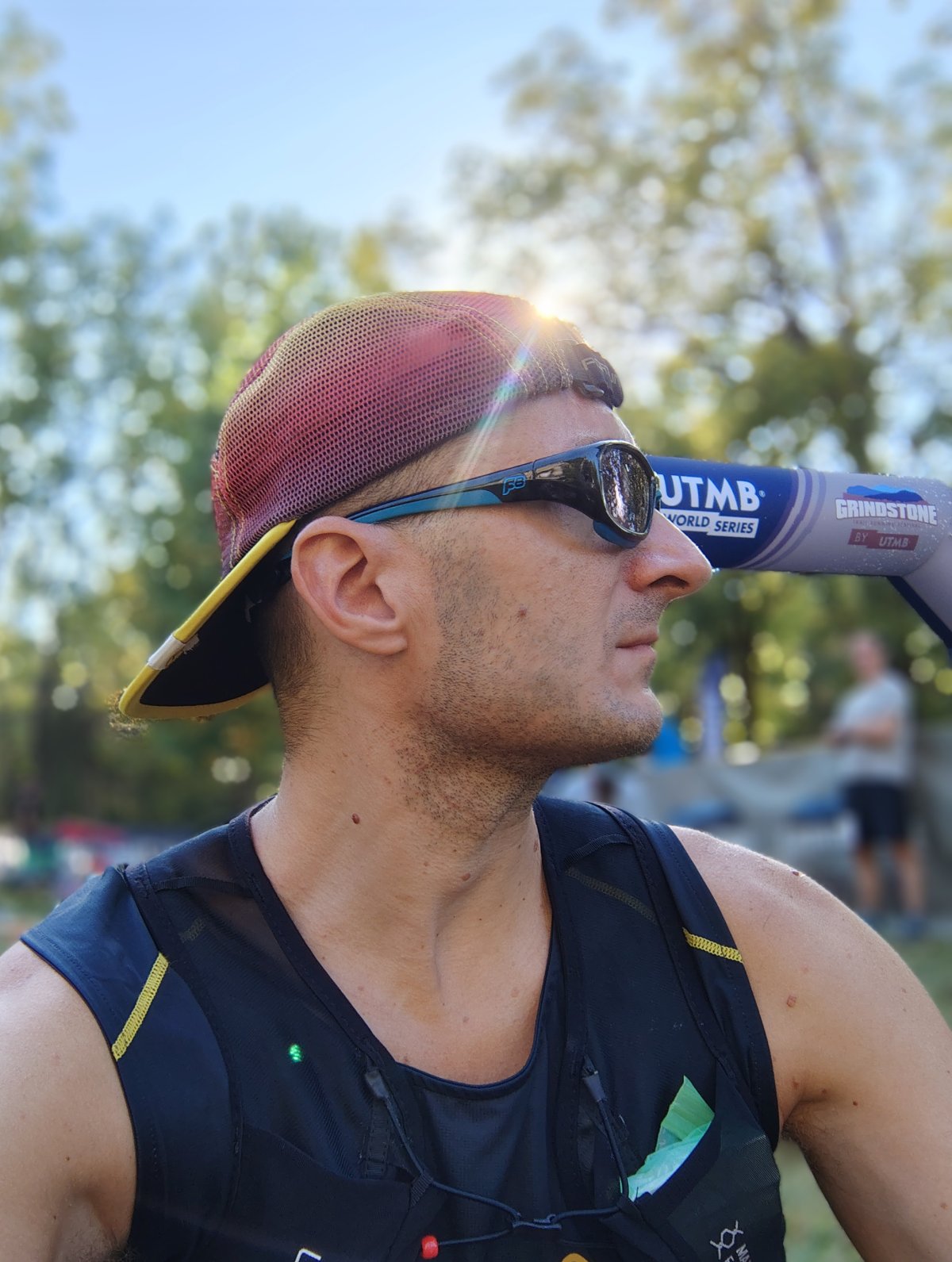
I felt confident in my gear. I wore La Sportiva shorts and a racing tank, topped with a La Sportiva running hat. This time, I swapped my usual La Sportiva Ultra Raptors 2 racing shoes for the Merrell Agility Peak 5. For hydration, I stuck with my trusted Ultra Spire handhelds and two different versions of Ultra Spire Lumen as the headlamps. I was fully equipped for a serious adventure. The seven-hour drive from New York to the start line was long, so I booked a hotel 20 minutes away to ensure I was fresh on race day. The day itself was hot and sunny, and I knew the heat could severely impede my performance. I was certain my stomach would rebel, leaving me unable to tolerate food and thus deprived of the energy needed for the long climbs.
With a 6 p.m. start, I had an abundance of time on race day, which I spent fighting boredom. I tried to steal a few hours of sleep, knowing two sleepless nights lay ahead, but it was difficult to quiet my mind. Lying in my car with my eyes open, suspended between dreaming and reality, I could hear the sounds of other runners bustling around, packing and prepping their gear in the same provisional parking area. It was hot, but I had strategically parked under the shade of a tree, keeping myself cool while I waited for the go-time.
Two hours before the start, I gave up on trying to sleep and ate a pre-prepared meal of beef with vegetables and rice from a Chinese restaurant. This proved to be a smart move, as I felt energized when the race finally began. The final instructions, a motivational speech from the race organizers, and the countdown followed...
And we were off. I remember effortlessly gliding along the smooth pavement of the first road sections, feeling excited, happy, and motivated. Then we hit the trails, and the climbs began. They weren't terrible; I managed them with ease. For the first six miles, we were on an upward trajectory, but my body felt strong. After that, a long downhill stretch began, lasting for several miles, before the trail climbed again. It was then I realized my energy was beginning to wane, despite consuming some energy gels. As night fell, the temperature barely dropped, remaining uncomfortably warm. The initial night climbs were almost fun, as I navigated the treacherous, rocky terrain with only my headlamp for a guide. The rest of the forest and mountain were cloaked in complete darkness, and my imagination worked overtime, trying to conjure images of what was hidden from my sight. Had this been my first ultra, I might have imagined wild animals sitting in the dark, watching my suffering with amusement. This time, however, I was too focused. I had to be meticulously careful with every step, analyzing the shape and angle of every rock and boulder without losing my pace. The calculations in my mind were lightning fast, as my body and mind worked in perfect tandem. I wanted to stay in that flow forever, but fatigue and a lack of energy started to set in.
The course itself was stunning but unyielding. The majority of it was on narrow mountain trails, with some insignificant sections on paved or gravel roads. I remember the first several kilometers were on asphalt, and the final stretch began on gravel before transitioning to pavement just before the finish. The rest was a pure trail-running experience on a variety of surfaces, from soft grassy paths to technical sections littered with boulders and rocks, demanding good uphill and downhill skills. It featured long, grinding climbs where you patiently ascended to the peaks before continuously "surfing" downhill like a flow of water smoothly navigating uneven terrain.
When the clock struck 6 p.m., a wave of mountain runners in multi-colored gear surged forward, pounding the first miles of paved road through the Virginia countryside. I deliberately started near the back of the pack, knowing there was no benefit in an early sprint. The mountain would inevitably humble and grind you down later, grounding your ego when you thought your flight would last forever. Besides, if I felt strong mid-race, I could always accelerate and show the true miracle of trail surfing when everyone else was flagging. So, I started as easy as I could, though not ridiculously slow, acutely aware that I needed to manage every minute to stay ahead of the aid station cutoffs and finish within the 36-hour limit.
The weather was oppressively warm — far too hot for a fall race. It was 29 degrees Celsius on the 19th, with a forecast of 26 degrees the next day. I anticipated that the heat would almost certainly cause stomach issues and a host of other problems, especially on the exposed ascents when the scorching sun would begin to erode my will. I pushed these anxieties aside as I navigated the beautiful Virginia countryside, logging easy miles on the empty roads with no significant climbs yet. A truck would occasionally pass the snaking line of runners, but then a reckless pickup truck sped by dangerously close, kicking up clouds of dust. I turned to watch, wondering what could possess someone to act with such disregard. Sometimes, you can't understand a person's motives until it's too late.
I felt confident in my gear. I wore La Sportiva shorts and a racing tank, topped with a La Sportiva running hat. This time, I swapped my usual La Sportiva Ultra Raptors 2 racing shoes for the Merrell Agility Peak 5. For hydration, I stuck with my trusted Ultra Spire handhelds and two different versions of Ultra Spire Lumen as the headlamps. I was fully equipped for a serious adventure. The seven-hour drive from New York to the start line was long, so I booked a hotel 20 minutes away to ensure I was fresh on race day. The day itself was hot and sunny, and I knew the heat could severely impede my performance. I was certain my stomach would rebel, leaving me unable to tolerate food and thus deprived of the energy needed for the long climbs.
With a 6 p.m. start, I had an abundance of time on race day, which I spent fighting boredom. I tried to steal a few hours of sleep, knowing two sleepless nights lay ahead, but it was difficult to quiet my mind. Lying in my car with my eyes open, suspended between dreaming and reality, I could hear the sounds of other runners bustling around, packing and prepping their gear in the same provisional parking area. It was hot, but I had strategically parked under the shade of a tree, keeping myself cool while I waited for the go-time.
Two hours before the start, I gave up on trying to sleep and ate a pre-prepared meal of beef with vegetables and rice from a Chinese restaurant. This proved to be a smart move, as I felt energized when the race finally began. The final instructions, a motivational speech from the race organizers, and the countdown followed...
And we were off. I remember effortlessly gliding along the smooth pavement of the first road sections, feeling excited, happy, and motivated. Then we hit the trails, and the climbs began. They weren't terrible; I managed them with ease. For the first six miles, we were on an upward trajectory, but my body felt strong. After that, a long downhill stretch began, lasting for several miles, before the trail climbed again. It was then I realized my energy was beginning to wane, despite consuming some energy gels. As night fell, the temperature barely dropped, remaining uncomfortably warm. The initial night climbs were almost fun, as I navigated the treacherous, rocky terrain with only my headlamp for a guide. The rest of the forest and mountain were cloaked in complete darkness, and my imagination worked overtime, trying to conjure images of what was hidden from my sight. Had this been my first ultra, I might have imagined wild animals sitting in the dark, watching my suffering with amusement. This time, however, I was too focused. I had to be meticulously careful with every step, analyzing the shape and angle of every rock and boulder without losing my pace. The calculations in my mind were lightning fast, as my body and mind worked in perfect tandem. I wanted to stay in that flow forever, but fatigue and a lack of energy started to set in.
The Night and the Storm
The aid stations became increasingly welcome, as I needed more and more time to recover after each major climb. I noticed that while the ascents demanded tremendous effort, the downhills were surprisingly easy and fast, despite their technicality. The aid stations and their volunteers were awesome, and it's hard to imagine finishing without their support. My stomach issues meant I couldn't eat much, although I tried various things. There were times when I couldn't even enjoy the wide variety of drinks and had to force myself to hydrate. I was told that many people drop from this race due to stomach problems, and I suspect the warm weather and the prolonged physical effort are significant culprits. Strangely, unflavored seltzer water was a lifesaver, and Coke and Sprite worked intermittently.
My rebellious stomach, fatigue, and low energy did not stop me. But another attack came from a different angle: the deep darkness of the night. This wasn't the first time I felt a profound low between 1 a.m. and 3 a.m. If I recall correctly, I was on a remote section of the trail, alone. I felt solitude but not loneliness. My mind was consumed with deciphering the next treacherous turn, adjusting my pace to the terrain ahead. Was this another exposed climb that required me to slow down and avoid falling into the abyss, or had the blessed downhill started, allowing me to "surf" for the next two miles before seeing the welcoming lights of the next aid station? Or was my mind just playing tricks, turning shadows into boulders? I suddenly found myself thinking about the comfortable life I had left behind. I was entering a cycle of temptation, as if the universe were testing my resolve, asking me why I was here, how badly I wanted to finish, and what I was willing to sacrifice. Was I willing to trade the comfort of my bed, a good meal, and a full night's sleep for this? What was the point? Maybe I should just stop and return to my normal life.
The night was dark and empty. My excitement was gone, replaced by a deep fatigue. Thoughts of dropping from the race began to creep in, but they were quickly countered by memories of my previous DNFs (Did Not Finish). I remembered how miserable and angry I had felt when I chose to surrender to the pain and suffering, trading the struggle for the promise of immediate comfort. That comfort never came. A DNF never brought the positive feeling I anticipated. I always felt betrayed, as if my own mind had cheated me. It would first beg me to stop to avoid further anguish, but once I complied, it would torment me with remorse and blame for being too weak to finish the job. It would create a million reasons to quit, and then, after I quit, it would create a million reasons why I should have kept going. The mind's plasticity is truly amazing; it has no fixed position but is constantly shaped by the data it receives. I caught this just in time, refusing to be drawn into my own mind's games. Despite its strenuous efforts to convince me to stop, I did not listen. I kept moving.
The night was grueling. I had initially calculated I would finish the first half of the race in 12 hours, but that deadline kept shifting as I needed more and more time to recover from each climb. Recovery requires patience, and I had to slow down. I literally fought for every single step, and every finished mile felt like a tremendous achievement. "How far is the next aid station?" a suffering co-runner asked me. "I don't know, maybe one kilometer ahead." "Why is the trail going up again when we were just climbing for so long?" another runner muttered to himself as I passed him. I could hear the frustration in his voice, as if the trail had betrayed him by offering a brief descent only to present another climb so close to the aid station.
Negative thoughts bombarded me, and I tried to push them aside, promising to address them later. Finally, the sunrise began to manifest itself. As the trail was bathed in natural light, it became much easier to run—both logistically, as I no longer needed my headlamp, and mentally, as the woods and mountains were no longer silent, pitch-black mounds but beautiful, multi-colored wonders augmented by the sounds of wildlife. Suddenly, I felt a renewed desire to race, and I did. I surfed down the hills and power-hiked up the trails, passing other runners, greeting them, and politely asking to squeeze by on the narrow sections. Some parts were so tight and exposed that I simply followed behind a group, listening to their conversations and occasionally joining in. It was a welcome change.
However, the daytime heat soon made me lose that feeling of flow. I sought refuge under the canopy of an aid station, feeling heat waves radiating from my skin. I usually use ice at aid stations, but there was none to be found. After a short rest, I pushed on, hoping the evening would bring cooler weather. I couldn't have imagined the dramatic change that awaited me. As darkness fell and I prepared for the second night, retrieving my headlamp, a thunderstorm began. I had to pull out my La Sportiva jacket. The rain started, and thunderstorms attacked us from multiple directions. Little did I know, the rain would not stop until after the last major climb of the race. Already wet but no longer hot, I attacked that final ascent—a 10-mile stretch from the Camp Todd aid station to North River Gap 2. I had to climb for about 5 kilometers to the top of the mountain before a gradual 10-kilometer descent to the next aid station. The climb was under a pouring rain, and the higher I went, the more thunder and lightning surrounded me. I was on high, exposed terrain, alone in the pitch-black night with lightning striking all around. It was a true trail-running experience: just me and the raw power of nature—water, earth, fire, and air—all converging as I stood in the middle of it. Once the descent began, I was certain I would finish. Surfing down the trails for the next 10K was pure joy. After the next aid station, I knew I had a section with rolling hills and no substantial elevation gain before reaching the final station.
Time flew by. I completed the 10K descent with ease, enjoyed a short break at the aid station, and then tackled the rolling hills. They didn't feel demanding at all, probably because my mind was still basking in the memory of the major climbs I had already conquered.
Then my watch indicated the last aid station was one mile away. I entered a state of pure happiness and "feastful mode," cruising along, anticipating the final stop around every corner. The trail ended, and I hit a gravel road. But for some reason, the aid station was nowhere to be seen. The gravel road seemed to stretch on forever, and to make matters worse, it started climbing instead of descending. I saw the disappointed faces of other runners, startled by the aid station's absence. Doubts began to creep in. Where was it? Finally, like a mirage in the desert, I saw the lights of the last aid station. Eager volunteers offered drinks and food, but I politely declined, explaining that I was going straight to the finish. I flew down the gravel road, knowing the pavement was just a few kilometers away.
I was told the truth, and soon I hit the paved road, which sloped downhill. It was close to 4 a.m. I descended, savoring the peacefulness of the sleeping Virginia countryside. A profound sense of calm and freedom washed over me. I could smell, breathe, and feel every movement of the air. I heard the rustle of leaves, the language of sleepy cows, and the first rooster greeting the new day. The sounds of fighting cats from a distant household reached my ears. I felt liberated, unstoppably running on the empty night road toward the entrance of Natural Chimneys Park. The closer I got, the louder the music became, the lights cutting through the darkness. I followed the signs and arrows, sprinting through the finish arc, where I was proudly announced as a finisher of the 2025 Grindstone 100. The race director greeted me and handed me my finisher's buckle. We stood for a few minutes, chatting about the race, my previous experience, and other events. I mentioned the Hellbender 100 in North Carolina, where he lived, and he strongly suggested I consider it.
After a few minutes, other runners began to arrive, and his attention shifted. I happily grabbed some food and drinks before getting into my car and stealing two hours of sleep. Feeling refreshed, I drove back to New York. The trip took longer than seven hours, as I needed more rest stops. Once home, I was so happy to see my wife and kids. It felt as though I hadn't seen them in ages. I told my wife about two moments during the race when I felt so low that I wanted to DNF and had tried to call her, but there was no cell service in the woods. The race taught me many things. It commanded not to be lazy and to have the patience to see things through to the very end. It's only over when it's over. I have so much to reflect on and may need to supplement this article with new thoughts in the future. I still have to tell the story of my 2023 Grindstone 100 finish.
My rebellious stomach, fatigue, and low energy did not stop me. But another attack came from a different angle: the deep darkness of the night. This wasn't the first time I felt a profound low between 1 a.m. and 3 a.m. If I recall correctly, I was on a remote section of the trail, alone. I felt solitude but not loneliness. My mind was consumed with deciphering the next treacherous turn, adjusting my pace to the terrain ahead. Was this another exposed climb that required me to slow down and avoid falling into the abyss, or had the blessed downhill started, allowing me to "surf" for the next two miles before seeing the welcoming lights of the next aid station? Or was my mind just playing tricks, turning shadows into boulders? I suddenly found myself thinking about the comfortable life I had left behind. I was entering a cycle of temptation, as if the universe were testing my resolve, asking me why I was here, how badly I wanted to finish, and what I was willing to sacrifice. Was I willing to trade the comfort of my bed, a good meal, and a full night's sleep for this? What was the point? Maybe I should just stop and return to my normal life.
The night was dark and empty. My excitement was gone, replaced by a deep fatigue. Thoughts of dropping from the race began to creep in, but they were quickly countered by memories of my previous DNFs (Did Not Finish). I remembered how miserable and angry I had felt when I chose to surrender to the pain and suffering, trading the struggle for the promise of immediate comfort. That comfort never came. A DNF never brought the positive feeling I anticipated. I always felt betrayed, as if my own mind had cheated me. It would first beg me to stop to avoid further anguish, but once I complied, it would torment me with remorse and blame for being too weak to finish the job. It would create a million reasons to quit, and then, after I quit, it would create a million reasons why I should have kept going. The mind's plasticity is truly amazing; it has no fixed position but is constantly shaped by the data it receives. I caught this just in time, refusing to be drawn into my own mind's games. Despite its strenuous efforts to convince me to stop, I did not listen. I kept moving.
The night was grueling. I had initially calculated I would finish the first half of the race in 12 hours, but that deadline kept shifting as I needed more and more time to recover from each climb. Recovery requires patience, and I had to slow down. I literally fought for every single step, and every finished mile felt like a tremendous achievement. "How far is the next aid station?" a suffering co-runner asked me. "I don't know, maybe one kilometer ahead." "Why is the trail going up again when we were just climbing for so long?" another runner muttered to himself as I passed him. I could hear the frustration in his voice, as if the trail had betrayed him by offering a brief descent only to present another climb so close to the aid station.
Negative thoughts bombarded me, and I tried to push them aside, promising to address them later. Finally, the sunrise began to manifest itself. As the trail was bathed in natural light, it became much easier to run—both logistically, as I no longer needed my headlamp, and mentally, as the woods and mountains were no longer silent, pitch-black mounds but beautiful, multi-colored wonders augmented by the sounds of wildlife. Suddenly, I felt a renewed desire to race, and I did. I surfed down the hills and power-hiked up the trails, passing other runners, greeting them, and politely asking to squeeze by on the narrow sections. Some parts were so tight and exposed that I simply followed behind a group, listening to their conversations and occasionally joining in. It was a welcome change.
However, the daytime heat soon made me lose that feeling of flow. I sought refuge under the canopy of an aid station, feeling heat waves radiating from my skin. I usually use ice at aid stations, but there was none to be found. After a short rest, I pushed on, hoping the evening would bring cooler weather. I couldn't have imagined the dramatic change that awaited me. As darkness fell and I prepared for the second night, retrieving my headlamp, a thunderstorm began. I had to pull out my La Sportiva jacket. The rain started, and thunderstorms attacked us from multiple directions. Little did I know, the rain would not stop until after the last major climb of the race. Already wet but no longer hot, I attacked that final ascent—a 10-mile stretch from the Camp Todd aid station to North River Gap 2. I had to climb for about 5 kilometers to the top of the mountain before a gradual 10-kilometer descent to the next aid station. The climb was under a pouring rain, and the higher I went, the more thunder and lightning surrounded me. I was on high, exposed terrain, alone in the pitch-black night with lightning striking all around. It was a true trail-running experience: just me and the raw power of nature—water, earth, fire, and air—all converging as I stood in the middle of it. Once the descent began, I was certain I would finish. Surfing down the trails for the next 10K was pure joy. After the next aid station, I knew I had a section with rolling hills and no substantial elevation gain before reaching the final station.
Time flew by. I completed the 10K descent with ease, enjoyed a short break at the aid station, and then tackled the rolling hills. They didn't feel demanding at all, probably because my mind was still basking in the memory of the major climbs I had already conquered.
Then my watch indicated the last aid station was one mile away. I entered a state of pure happiness and "feastful mode," cruising along, anticipating the final stop around every corner. The trail ended, and I hit a gravel road. But for some reason, the aid station was nowhere to be seen. The gravel road seemed to stretch on forever, and to make matters worse, it started climbing instead of descending. I saw the disappointed faces of other runners, startled by the aid station's absence. Doubts began to creep in. Where was it? Finally, like a mirage in the desert, I saw the lights of the last aid station. Eager volunteers offered drinks and food, but I politely declined, explaining that I was going straight to the finish. I flew down the gravel road, knowing the pavement was just a few kilometers away.
I was told the truth, and soon I hit the paved road, which sloped downhill. It was close to 4 a.m. I descended, savoring the peacefulness of the sleeping Virginia countryside. A profound sense of calm and freedom washed over me. I could smell, breathe, and feel every movement of the air. I heard the rustle of leaves, the language of sleepy cows, and the first rooster greeting the new day. The sounds of fighting cats from a distant household reached my ears. I felt liberated, unstoppably running on the empty night road toward the entrance of Natural Chimneys Park. The closer I got, the louder the music became, the lights cutting through the darkness. I followed the signs and arrows, sprinting through the finish arc, where I was proudly announced as a finisher of the 2025 Grindstone 100. The race director greeted me and handed me my finisher's buckle. We stood for a few minutes, chatting about the race, my previous experience, and other events. I mentioned the Hellbender 100 in North Carolina, where he lived, and he strongly suggested I consider it.
After a few minutes, other runners began to arrive, and his attention shifted. I happily grabbed some food and drinks before getting into my car and stealing two hours of sleep. Feeling refreshed, I drove back to New York. The trip took longer than seven hours, as I needed more rest stops. Once home, I was so happy to see my wife and kids. It felt as though I hadn't seen them in ages. I told my wife about two moments during the race when I felt so low that I wanted to DNF and had tried to call her, but there was no cell service in the woods. The race taught me many things. It commanded not to be lazy and to have the patience to see things through to the very end. It's only over when it's over. I have so much to reflect on and may need to supplement this article with new thoughts in the future. I still have to tell the story of my 2023 Grindstone 100 finish.