VERMONT 100
The Vermont 100-mile ultramarathon isn't just a race—it's a legendary test of grit set against the stunning backdrop of the Green Mountains. As one of the nation's oldest and most respected 100-mile events, it draws endurance athletes who want to push their limits.
Having toed the line four times, each journey has proven to be a testament to resilience and the magnetic pull of this iconic race.
My first entry in 2022 began with eager anticipation. I'd secured my spot through the lottery, picturing a runnable course of gentle, rolling hills. But July's heat had other plans. Despite my meticulous training, I underestimated its brutal power. My gear was locked in, but the real unknown was my stomach—could it handle the demanding fueling strategy?
2022: My First Dance with a Beast
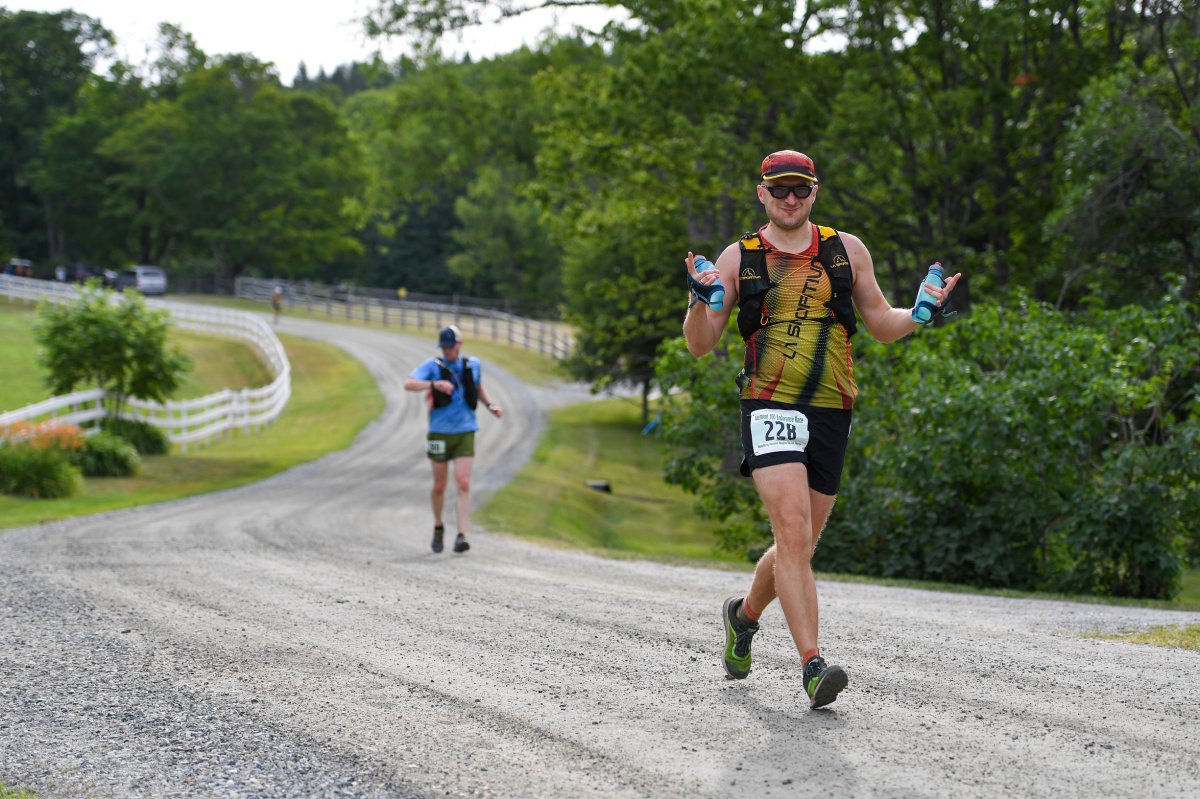
My first entry in 2022 began with eager anticipation. I'd secured my spot through the lottery, picturing a runnable course of gentle, rolling hills. But July's heat had other plans. Despite my meticulous training, I underestimated its brutal power. My gear was locked in, but the real unknown was my stomach—could it handle the demanding fueling strategy?
The course, a mix of dirt roads and paved roads with sections of trails, seemed manageable, justifying the tight 30-hour cut-off. My only goal was to finish.
I arrived from New York, camping at the start/finish line, soaking in the crisp mountain air. After a fantastic race dinner, I managed a few hours of sleep before a 3 a.m. wake-up call. The 4 a.m. start was pure magic—a winding river of headlamps disappearing into the pre-dawn shadows. The first 30 to 40 miles were effortless. My legs glided over the trails in the cool darkness, and I stuck to my plan of conservative pacing, fluids, and gels. But as the sun rose, its heat began to take a heavy toll. The dirt roads gave way to the uphill trails leading to exposed, grassy plateaus with zero shade. My quads screamed on the steep downhills, and my stomach completely revolted. By mile 40, everything—gels, electrolytes, even aid station food—was rejected. My energy plummeted, and the race transformed from a thrilling effort into a fight for survival. But my mind was an iron fortress; a DNF was not an option.
As evening approached, the cool air brought some relief, though the stomach issues and fatigue persisted. I pushed through the night, finding immense relief when the paved roads appeared in the final miles. Suddenly, at the last aid station, just five miles from the finish, everything changed. My stomach settled, and the crushing fatigue vanished. I felt an exhilarating surge, as if I were flying. Nothing could stop me. I crossed the finish line with hours to spare, filled with an overwhelming sense of accomplishment.
2024: A Familiar Battle
Getting into the 2024 lottery was a surprise. Already training for the TDS UTMB in August, I saw the Vermont 100 as a demanding tune-up run rather than my main event. But the chance to return to this beautiful course was too good to pass up. My training for TDS had me in a great place, focused on consistency through hill repeats, long runs, and speed work.
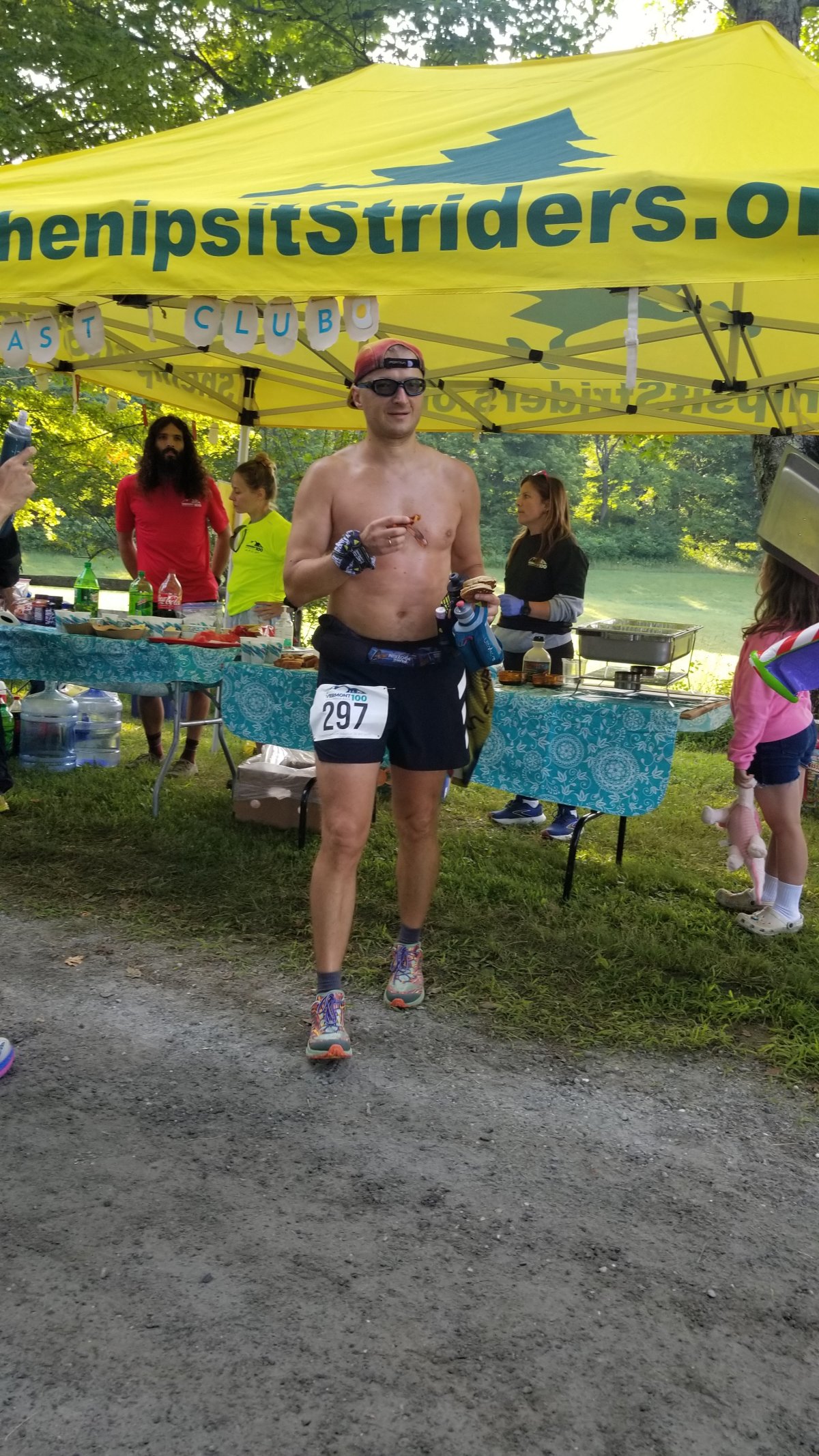
Just like in 2022, I arrived prepared for the heat. My gear was a trusted setup, and the first half of the race was smooth sailing. But by mile 50, the unforgiving heat again took its toll. My stomach rebelled, and my energy crashed. A brief moment of pure exhilaration came during a steep downhill section past the 100K mark, where I flew down the trail with a triumphant shout. But that second wind was short-lived.
By mile 72, I hit the wall hard, and the thought of dropping out took hold. A kind volunteer encouraged me to keep going, but I could barely move. After 10 minutes of intense mental struggle, something shifted. I stood up, gave myself a soft pep talk, and started running again, leaving the temptation to quit behind. From that moment on, it was a battle against my own physical limits. I pushed through, one aid station at a time, until I reached the final stop. A profound surge of pride washed over me. I knew I would finish. The final miles were a celebration. I danced and sang, crossing the finish line filled with gratitude.

2025: Overconfidence and Redemption
My third entry was a mix of familiar comfort and fresh challenge. Overconfident and ready to push my limits, I started at a blistering pace. My headlamp cut through the pre-dawn gloom as I flew past other runners, feeling unstoppable. For the first marathon portion, I was in the top three—a high that quickly turned into my lowest low. At mile 26, my quads completely gave out. My vibrant energy vanished, replaced by a dull, numbing pain. The thought of quitting crossed my mind, but the image of a DNF was more painful than any physical discomfort. With a new mindset, I started moving again, one deliberate step at a time. My stomach rebelled again, and dizziness set in. I continued to push forward, using small sips of Coke as my only source of hydration and energy. This grueling state of physical and mental exhaustion lasted for miles. I was sure I was done for the day.
However, at mile 92, a familiar determination returned. Reaching the final aid station, I smiled to myself, knowing I had triumphed over my own self-doubt. The lowest low had, once again, transformed into the highest high. I crossed the finish line happy and proud, a three-time finisher of the Vermont 100. It's a race that calls to me, a test I keep returning to, a beautiful summons to continually expand my limits.
Unplanned, Unforgettable: A Fourth Buckle at the 2026 Vermont 100
Sometimes the races that mean the most are the ones you never planned on running. When the lottery results for the 2026 Vermont 100 came out, my name wasn’t drawn. I found myself buried deep on the waitlist with virtually zero expectation of getting in. Accepting my fate, I moved on and began planning my racing calendar elsewhere.
Then, about a month before race day, the waitlist suddenly began moving at a blistering pace. Before I fully realized what was happening, I had slipped onto the active starter list. I was in—unprepared for the surprise, but thrilled.
There was just one major hurdle left: volunteering. While I had qualified with a few 100-milers in 2025, I still lacked the mandatory eight hours of trail service, and time was running out. I reached out to the race director, Amy Rusiecki, explaining my predicament. She graciously suggested I complete my volunteer hours right at the Silver Hill Meadow start/finish area on the Friday before the race. It was a perfect solution, and I eagerly accepted.
Friday: Earning the Bib
My journey officially began at 4:00 AM on Friday, July 17. Traffic was light as I made the scenic four-and-a-half-hour drive from Long Island up to Vermont, arriving at Silver Hill Meadow just before 10:00 AM. I secured a great camping spot, parked nearby, and checked in with the volunteer coordinator under cool, promising skies.
Our first assignment was setting up the finish chute. We were dropped off in the woods where the final stretch of trail emerges. Armed with sticks and mallets, we hammered down post after post along both sides of the trail, securing brilliant red tapestry across them to create a fittingly heroic finish line.
After an ATV ride back to camp and a brief briefing, we transitioned to parking duty. My job was ushering the steady stream of incoming campers to the unloading zones before directing them to long-term parking. The work took several hours of continuous movement, but as the afternoon traffic finally subsided, my volunteer obligations were officially fulfilled. I picked up my bib and swag, then relaxed over a wonderful pre-race dinner alongside fellow runners and volunteers.
By evening, I was tired but deeply content. I headed to my tent to catch whatever sleep I could before the early morning alarm. It wasn't a deep sleep, but resting for a few hours was enough.
Saturday, 4:00 AM: Into the Darkness
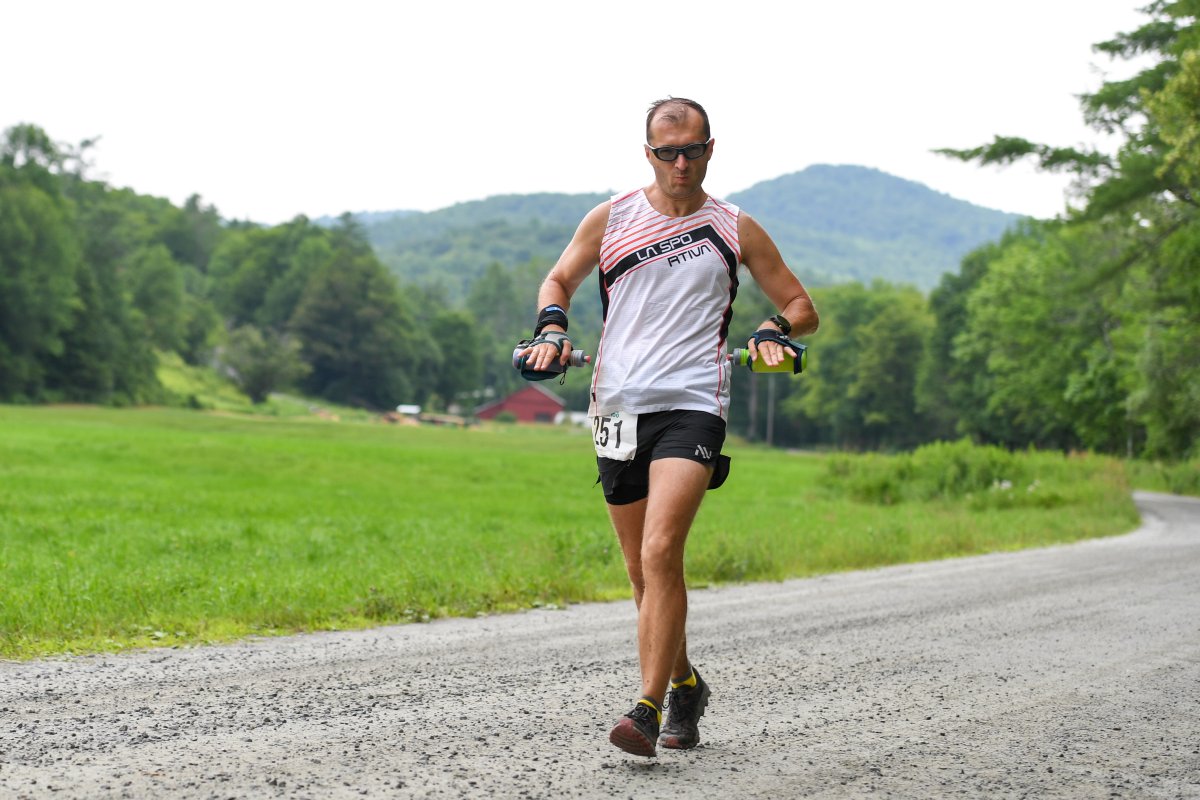
I woke up at 3:00 AM on Saturday, geared up, and stepped out into the pre-dawn air. I opted for my La Sportiva racing tank, Nnormal Racing shorts, and a light, grippy pair of La Sportiva Helios 3 shoes for the trails. An ice bandana and hat were stowed in my waistband pocket, and I carried my usual pair of UltrAspire handhelds. With overcast skies keeping the temperature comfortable, I quietly hoped we might avoid the heat entirely and set up a fast day.
Promptly at 4:00 AM, the race began. A massive pack of ultrarunners surged into the darkness, a long snake of headlamps swiveling across dirt roads and wooded singletrack.
The first 50 miles felt remarkably light and fluid. I finished them in about 9 hours and 20 minutes. I kept my nutrition simple—mostly fresh watermelon at aid stations and the occasional protein bar. Fluid-wise, I started on Skratch before transitioning to Coke for calories and Nuun tablets for electrolytes. The miles clicked away smoothly, and I especially loved the shared stretches of trail alongside the horses. Feeling strong, I ran all the rolling hills throughout the first half without stopping.
Knowing the climbs between Miles 50 and 70 would be the true test, I transitioned to a steady power-hike through the major ascents. I kept my aid station turnarounds minimal through the first 100K, and it wasn't until around Kilometer 105–110 that heavy muscle fatigue finally began to settle into my legs.
Fog, Fatigue, and the Final Push
Weather-wise, the day stayed surprisingly kind. Cool overcast skies gave way to a light drizzle, which briefly turned into a full shower. I was soaked, but dried out quickly once the rain passed.
By the time night fell and I flipped my headlamp back on, I was around Kilometer 125–130. A dense, heavy fog rolled over the hills, cutting visibility down to almost nothing. My pace slowed dramatically; every footstep required careful focus just to navigate the obscure trail.
My stomach shut down, my muscles continued to ache, and my momentum stalled. I realized then that a sub-24-hour finish was off the table—my legs simply didn't have another gear to force up the remaining climbs, despite having maintained sub-24 pace through the first 100K.
Rather than fight the reality, I let go of the clock. I gave myself permission to relax, soak in the surroundings, and just enjoy the remaining miles as best I could.
When I finally reached the 1-mile mark, a wave of relief washed over me. I couldn't run anymore, but I power-hiked and shuffled with everything I had left. Crossing the line in just under 25 hours, I earned my fourth Vermont 100 buckle.
After catching up with the race crew, collecting my buckle, a pair of Rabbit finisher shorts, and a Solo Runner metal cup, I crawled into my tent and fell into a deep sleep. Less than two hours later, I woke up to a tick crawling up my arm—my cue that it was time to pack up and head home.
I packed the car and began the drive back to New York with a heart full of gratitude. Reconnecting with my family and sharing the adventure was the perfect conclusion.
Within a couple of days, the bounce returned to my legs, along with that familiar itch to hit the trails again. Vermont 100 is a truly special race.